
Sooooo, I decided to try resin.
Not because I needed a new hobby.
Not because I could afford it.
But because my brain said, “This looks fun and harmless.”
My brain was… optimistic.
I watched a bunch of Daniel Cooper videos, nodded along, and decided I was ready. I already had a UV light from doing my nails, so UV resin felt like a reasonable place to start. I bought a couple of molds, silicone mats, mica powders, and some inks, fully convinced I was about to be a pro.


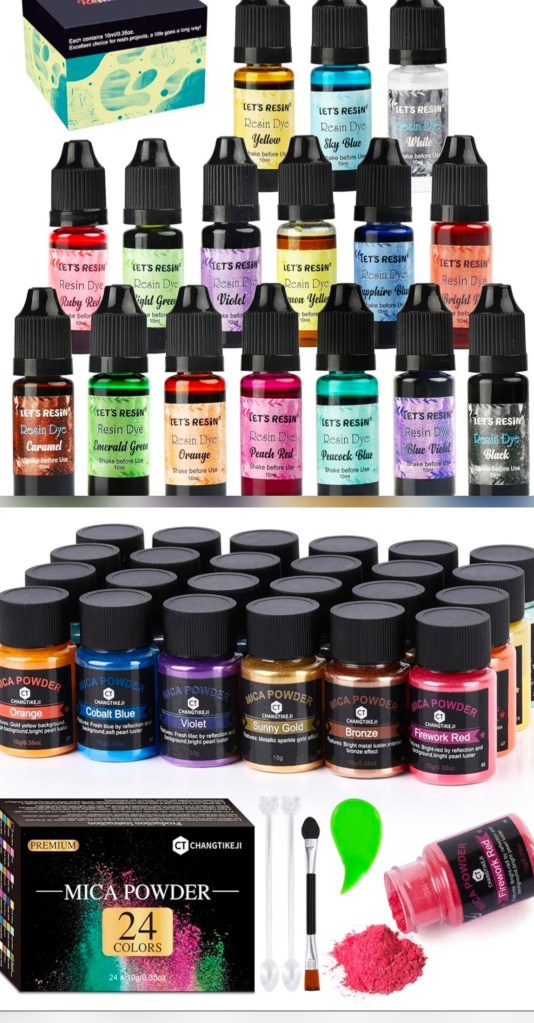
For my very first project, I went straight for a tiny monogram mold—an “S.” In my head, I was going to make earrings for my daughter-in-law as a gift. It was an ambitious choice for a first attempt. I tried coloring the letter with mica powder and then filled it with clear UV resin mixed with glitter. The mold itself worked fine, but my technique didn’t. I used too much glitter, the color choice was wrong, and the letter almost disappeared completely. It was a quick lesson in how unforgiving small, detailed molds can be when you’re brand new to resin.
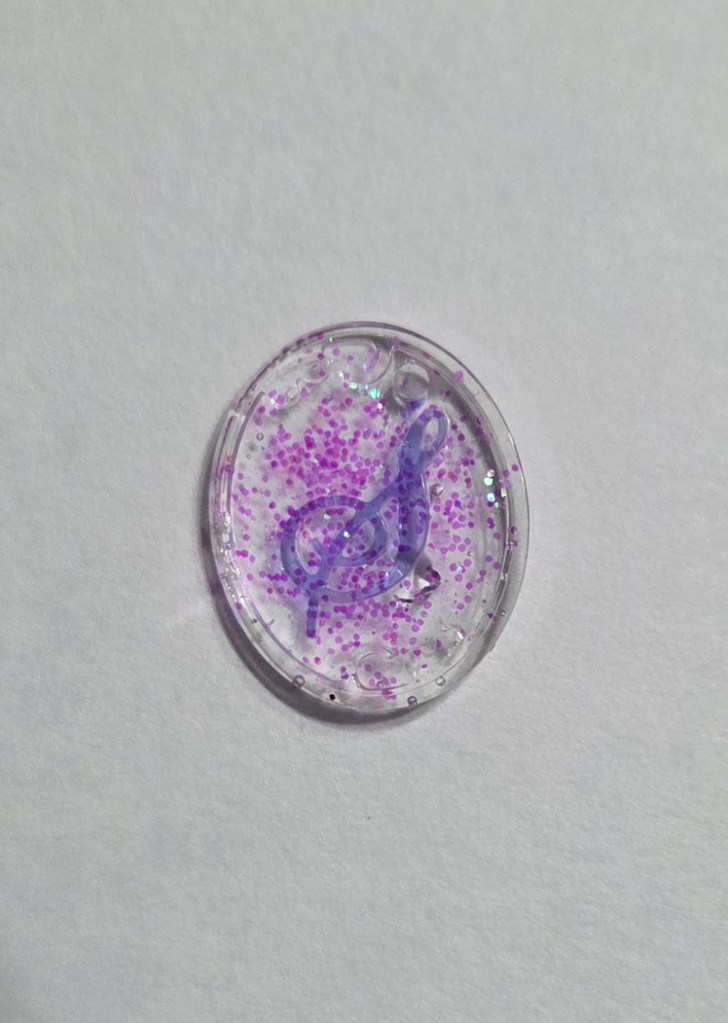
For my second attempt, I made seashells. I brushed mica powder into the ridges and details, cured them, and was pleasantly surprised. They weren’t perfect, but they actually looked like seashells, which felt like a step in the right direction and a small win worth celebrating.
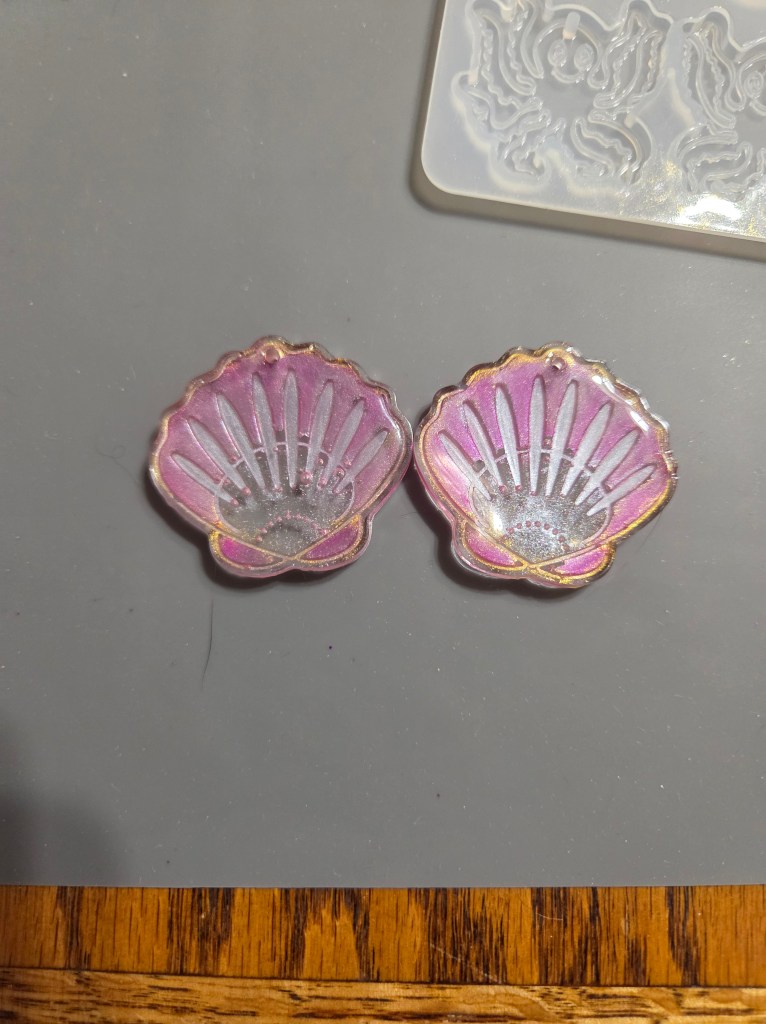
After that, I decided to try a technique I’d been curious about from the beginning. I had seen Daniel Cooper do this thing where he pours glue, swirls color into it, dips a cabochon into the pattern, lets it dry, and then seals the whole piece in resin. It looked simple enough.
My first attempt did not go so well. I poured the glue, added the color, swirled it around, and dunked the cabochon I had made—without thinking through the very important detail of how I was going to get it back out. The glue was wet, the cabochon was slippery, and I ended up with glue all over the place. By the time I got it out, parts of the pattern had been wiped away completely where my fingers had slid across the bottom. The whole thing was a sticky, smeared mess. I wiped it clean and moved on.
After rewatching the videos, I realized I had missed a very important step: letting the glue dry a bit before dipping anything into it. So I tried again. This time I poured the glue, added the colors, swirled them around, and then set everything aside until the next day. The results were better. The pattern transferred, although the colors were a little muddy in places. I liked it more than my first attempt, but not enough to keep it. Once the glue dried, I peeled it off the back, leaving me with a collection of clear cabochons waiting for me to get better at this resin thing before I try again.
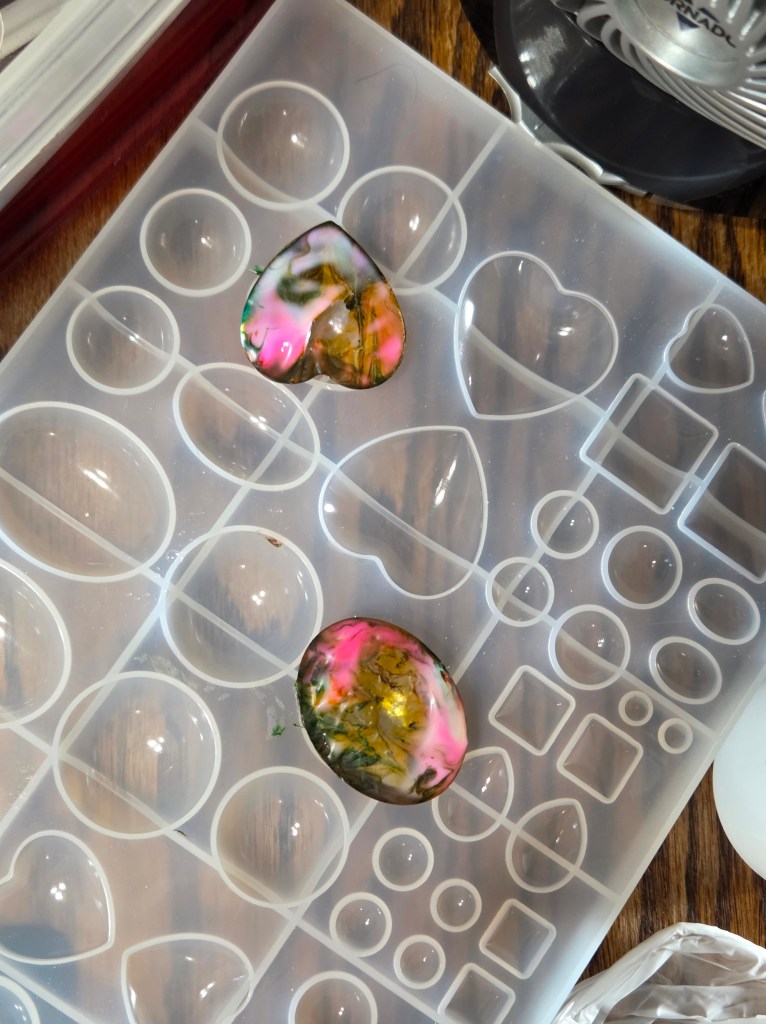
Since then, I’ve experimented with all sorts of small projects. I made earrings for my other daughter-in-law, played around with charms from my jewelry-making supplies by clipping the loops off the top of them, and slowly figuring out what works and what absolutely does not. There have been accidents, there have been happy accidents, and there have been plenty of moments where something went straight into the trash without hesitation.
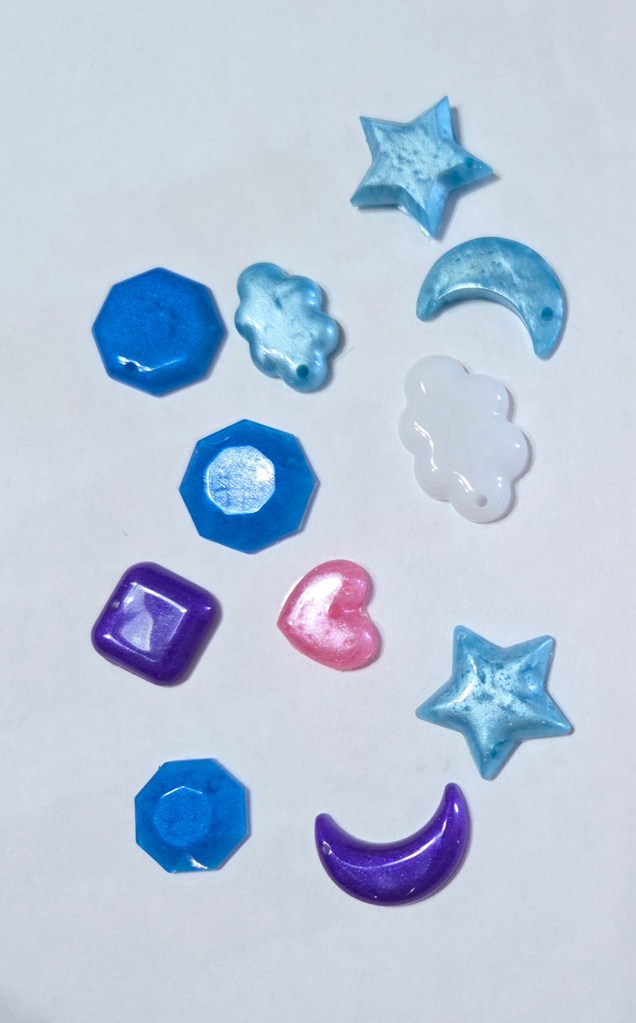
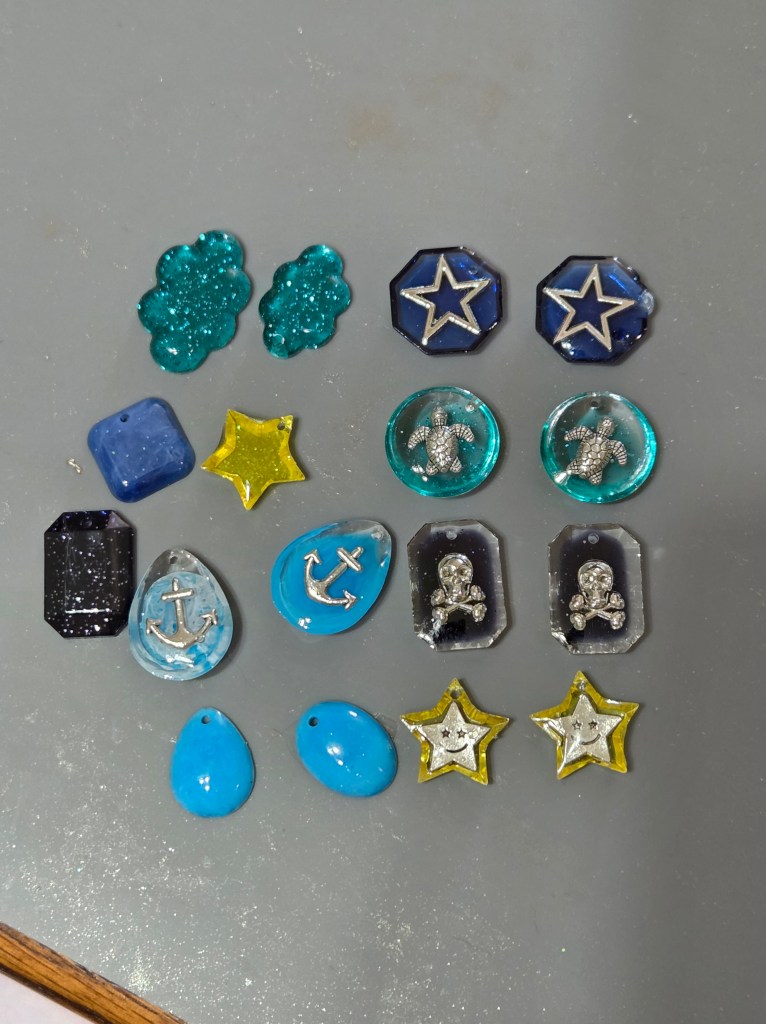
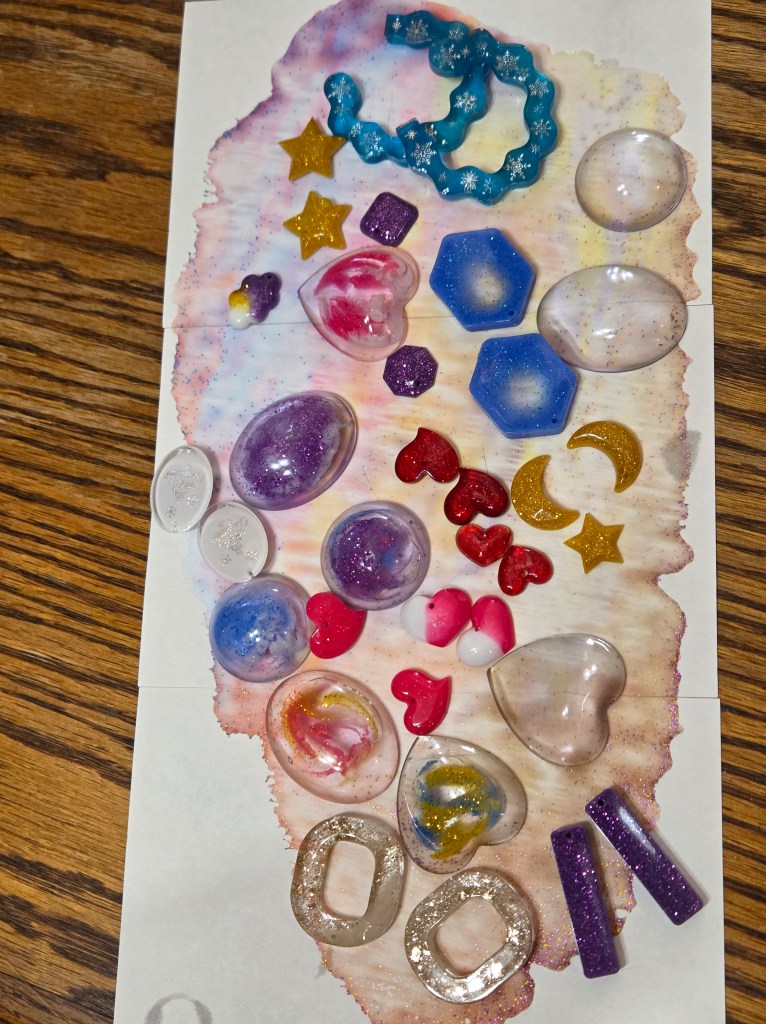
One major lesson came when I decided to make coasters. I bought coaster molds and a large amount of UV resin, fully intending to make them for everyone in the family for Christmas. What I didn’t know until after the fact is that UV resin and coasters are not friends. The pieces warped, didn’t cure properly on the bottom, and generally looked terrible, so there will be no resin coasters, but I do now own a generous supply of UV resin.
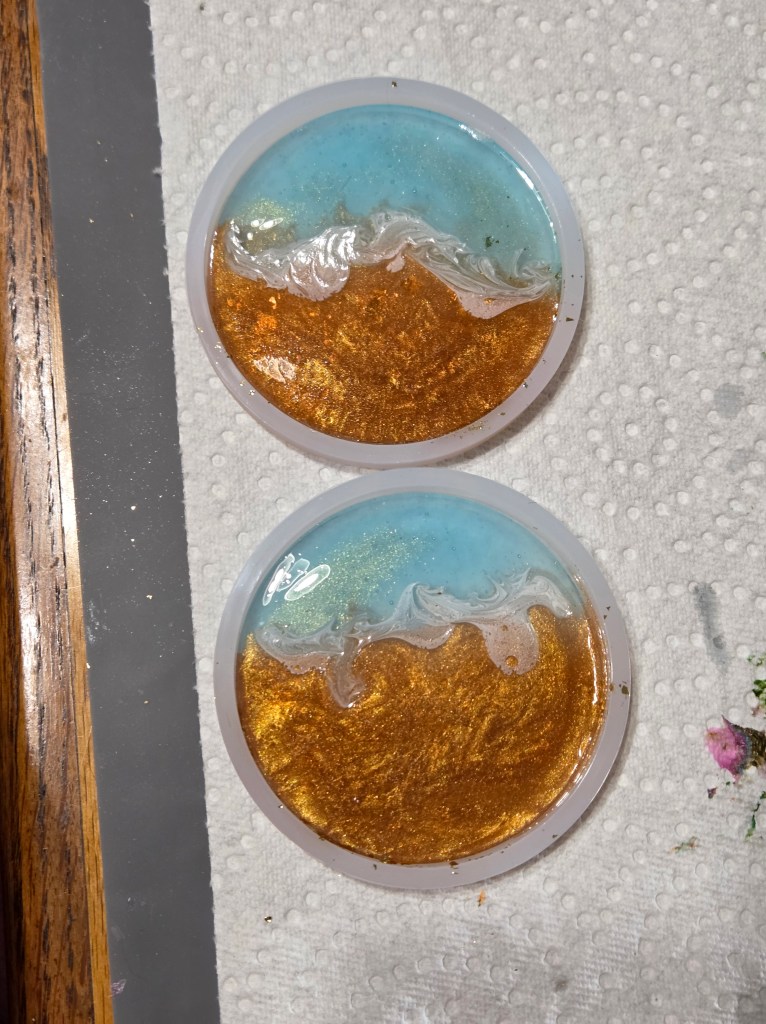
More recently, I’ve started experimenting with alcohol inks. I’m still learning how they behave, but more than anything, I’m learning patience. Resin is a craft that involves a lot of waiting—pour, wait, cure, wait, repeat. That’s something you don’t really see in videos, because all the waiting gets skipped or sped up. Learning to slow down has been part of the process.
I also made my first piece of resin paper, and I absolutely love it. I don’t know yet what I’ll use it for, but I know I’ll be making more.
This whole process has been about experimenting, adjusting expectations, and learning as I go. Not everything turns out well. Not everything gets kept. But I’m enjoying it—and that’s what makes me want to keep going.
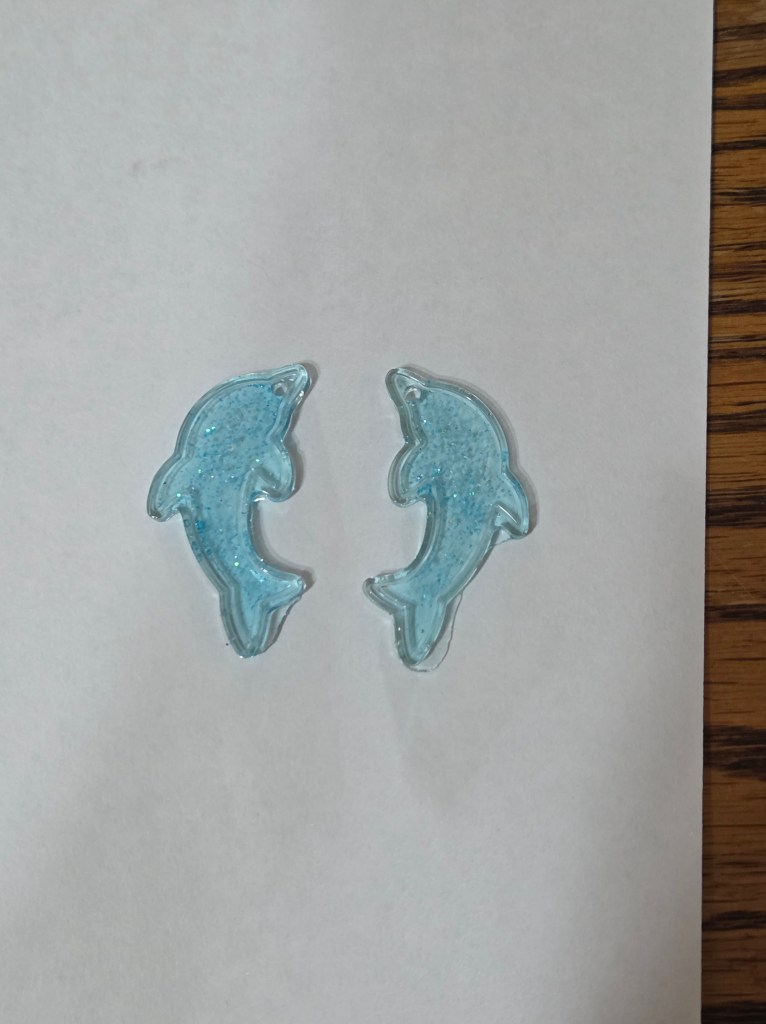
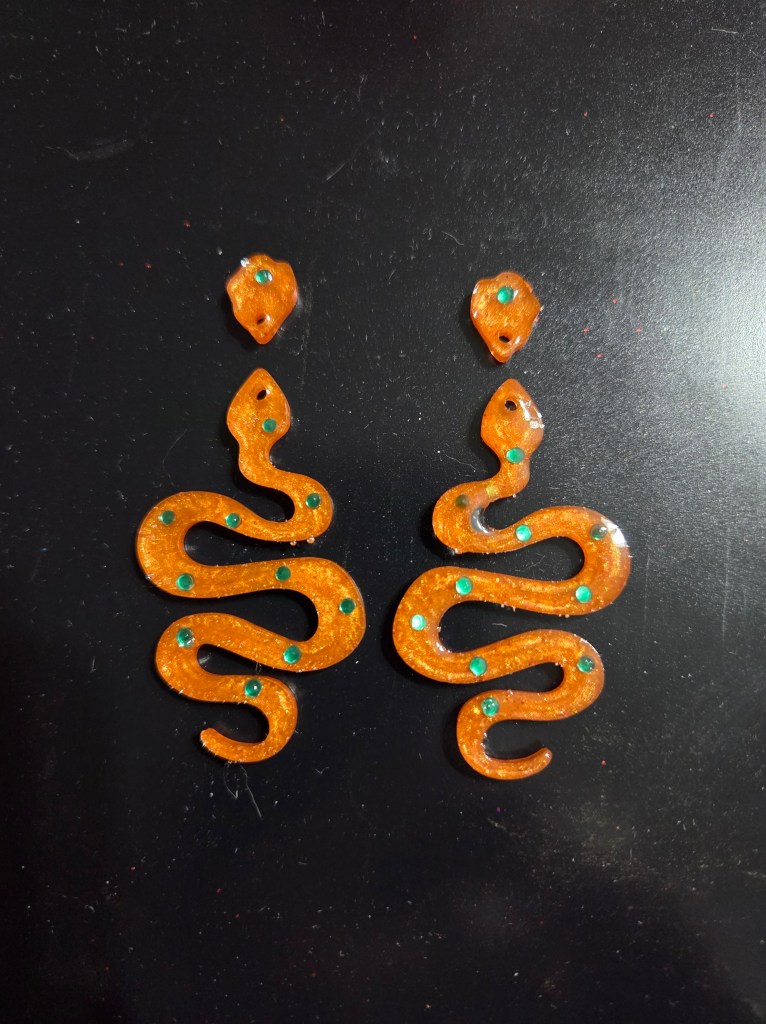
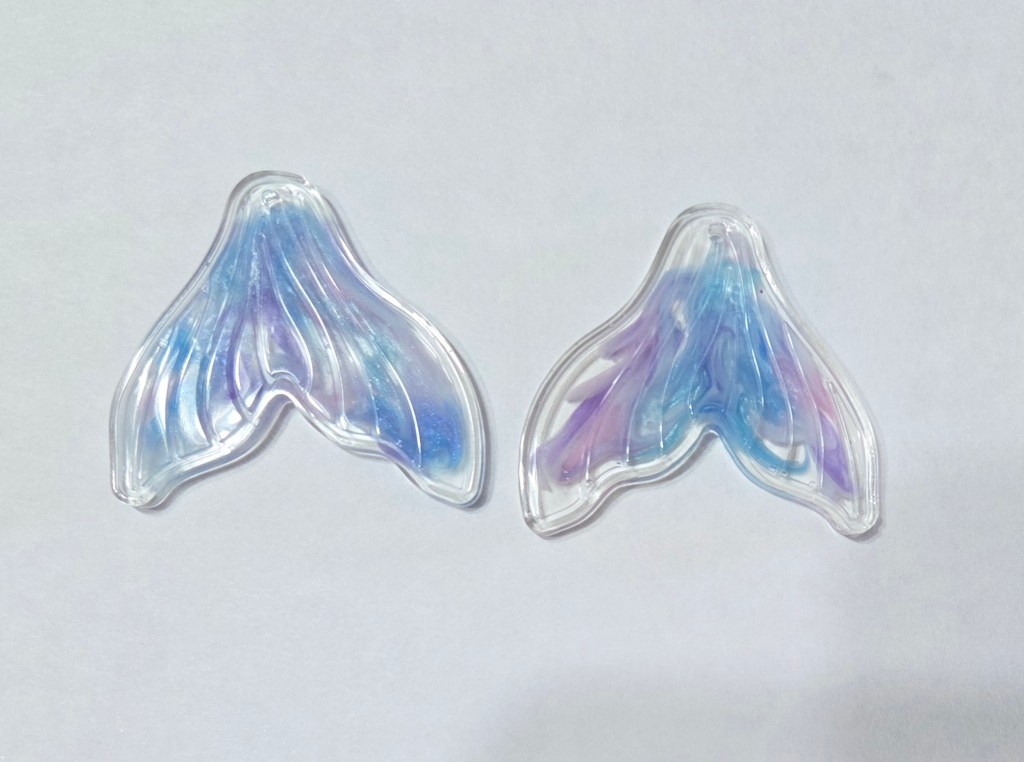
I’ve decided to stick exclusively with UV resin. Epoxy isn’t a good fit for my space, airflow situation, or budget. UV resin works for what I want to do, and that’s enough.
 A Stitchin’ Hot Mess
Leave a comment